Effective Water Testing Strategies for Healthcare Facilities
Healthcare facility water testing is not just a task on a checklist. For hospitals, aged care homes, and specialist clinics, it is central to patient safety. From tap outlets in intensive care units to water used in renal dialysis, consistent quality must be guaranteed. That is not easy. Regulations are tightening, audits are getting sharper, and public expectations around water safety keep rising.
Assets like water heaters, pipe loops, and cooling towers can carry high risk if they are not monitored closely and often. Sending off samples to a lab does not hold up anymore. Facilities need faster, more informed ways to spot issues, respond quickly, and keep ahead of problems. Smart monitoring, predictive analytics, and compliance automation are not just new ideas, they are quickly becoming best practice. For healthcare facilities, it is time to move from reactive to preventative testing strategies built around data-driven decisions.
Prioritising High-Risk Zones Within the Facility
Some areas carry more risk than others and need closer attention. The water systems servicing ICUs, nurseries, or reprocessing machines often experience issues first. These spaces serve the most vulnerable patients and rely on consistent hot water temperatures and clean flow. Any drop in disinfectant levels or temperature drift could allow bacteria to grow, including Legionella.
To get a full picture of your facility:
- Start by mapping out the layout of tanks, loops, and outlets
- Measure flow rates, stagnation zones, and thermal performance
- Use predictive analytics tools that track changes over time to flag which zones are drifting from expected behaviour
When historical data is collected across several seasons, patterns appear. That insight helps focus attention on zones that are most at risk without wasting time on repeated manual sampling in low-risk areas.
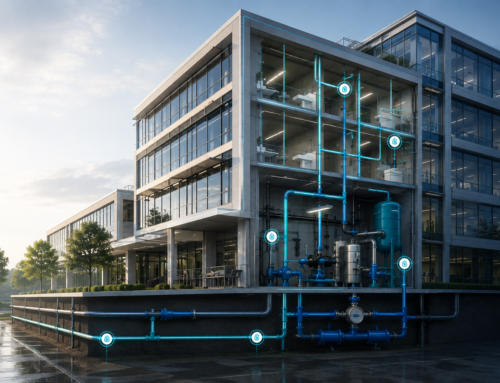
D2K Information’s Information Engine™ platform allows mapping and monitoring of critical water assets, giving facility teams clear visibility of where risk begins and how to focus controls where they matter most.
Moving Beyond Manual Sampling
Manual testing, while still commonly used, has serious gaps. It is a static moment in time that often misses day-to-day changes. External lab testing adds delays and cannot support quick decision-making during a quality incident. Rounds are prone to human error, and results usually take days to filter back to management.
Looking at automated online monitoring, as offered by Information Engine™, instead changes how facilities stay on top of risk. With sensors placed at strategic points, like central mixers, recirculation loops, and return lines, it is possible to receive readings every few minutes. This turns water quality monitoring into a more up-to-date view rather than a monthly snapshot.
Where Legionella control is a concern, rapid signals confirm that outlet temperatures are within safe ranges and that disinfectant dosing remains steady. Information Engine™ can automatically flag a shift and send alerts, allowing a response before the issue escalates. That approach is safer and smarter than waiting for lab results to suggest something was wrong a week ago.
Our timely temperature and chlorine monitoring supports compliance with hot water network safety and infection control standards in hospitals and aged care facilities.
Using Predictive Analytics to Inform Water Management Decisions
Predictive analytics take today’s data and help forecast tomorrow’s challenges. By analysing trends like gradual temperature loss or changing tank refill patterns, these tools allow for identification of problems before they become safety risks.
Predictive analytics allows facilities to:
- Spot slow-moving failures such as diminished disinfectant uptake
- Trigger planned interventions based on likely future drops
- Compare system performance across wards or buildings
Healthcare facility water testing benefits greatly from this approach. Predictive insights shift the focus away from reacting to failure. Instead, water managers can log into a dashboard and see where conditions are heading, not just where they have been. This supports more confident scheduling for maintenance, better role-based decision-making, and stronger records for audits.
Our predictive reporting solutions generate maintenance recommendations from water trend data, helping facilities catch hazards before audits or patient risk events occur.
Automating Compliance Tasks Without Losing Control
Keeping records for audits and responding to standards are part of everyday expectations in water safety. Manual paperwork does not have to increase with these expectations. With the right setup, compliance tasks can happen in the background.
What makes automation successful is confidence and clarity. Information Engine™ produces automatic logs that pull data directly from monitoring systems that are precise and trusted by regulators. Immutable records provide timestamped tracking, so there is no concern about editing or gaps. Reports can be scheduled daily or weekly and made available through secure platforms for managers, operators, and auditors.
The end result is:
- Automatically generate reports aligned to Australian guidelines
- Set alerts based on pre-defined limits for key indicators
- Assign data access by role to protect sensitive system controls
These tools give water safety teams back their time and help supervisors feel more in control, not stuck responding after something has gone wrong.
Turning Data Into a Safer, Smarter Facility
Shifting to smarter healthcare facility water testing is about responding faster, keeping compliance checked off, and lowering the risk of patient harm. When chlorine dips or valve blockages can be detected rapidly, issues can be fixed before they lead to exposure.
With predictive analytics and compliance automation, process efficiency improves. Teams experience less stress, confidence increases up to the board level, and there is a demonstrated preventative approach to risk.
The end goal is simple: a healthcare facility that operates safer, smoother, and smarter. When water quality monitoring is timely, shared, and trusted, there is readiness for audits and, more importantly, ongoing protection of public health as the top priority.
Ready to move away from outdated approaches and strengthen your risk management strategy? We can help modernise your systems with rapid insights designed for compliance. Our solutions for healthcare facility water testing streamline management of critical zones, automate reporting, and help you stay ahead of water quality concerns before they impact patient health. At D2K Information, we are committed to helping you protect patients, simplify compliance, and future-proof operations. Contact us today to discuss your facility’s needs.