Understanding Critical Control Point Monitoring in Water Treatment
Victorian water utilities operate under sustained regulatory scrutiny. Victoria’s Safe Drinking Water Regulations 2025 now holds utilities to stricter water safety standards in line with Australian Drinking Water Guidelines health-based targets. Alongside increasing expectations from both regulators and the communities they serve, compliance has become a continuous operational discipline rather than a periodic reporting exercise. Legacy systems built around manual data capture and delayed laboratory results now struggle to meet the demands of this environment.
D2K Information’s Information Engine™ software and the integrated CCPWatchⓇ module represents a fundamental shift in how utilities manage compliance risk. By establishing timely visibility at defined critical control points (CCPs), teams can move from reactive incident response to predictive control, identifying deviations as they emerge rather than discovering them in post-event analysis.
Research into integrated water management frameworks confirms that timely parameter tracking directly influences both operational outcomes and public health protection. For utilities where compliance failures carry regulatory, financial, and reputational consequences, precision monitoring has become a core part of effective risk management.
Understanding Critical Control Points in Today’s Water Treatment
Victoria’s Safe Drinking Water Regulations (SDWR) 2025 now requires utilities to monitor CCPs across the entire water network for the first time. Victorian utilities now also maintain compliance with the health-based targets framework of the Australian Drinking Water Guidelines (ADWG).
In operational terms, this translates to defined threshold limits for parameters including chlorine residual, pH, turbidity, and temperature. Threshold breaches often provide the earliest indication of equipment degradation or contamination events. However, manual sampling protocols that check these parameters at infrequent intervals create measurement gaps where conditions can deteriorate significantly between readings. D2K Information custom-designed Information Engine™ and CCPWatchⓇ to help utilities eliminate these blind spots through timely automated monitoring and rapid alerts to relevant personnel.
CCPWatchⓇ Integration and Performance Advantages
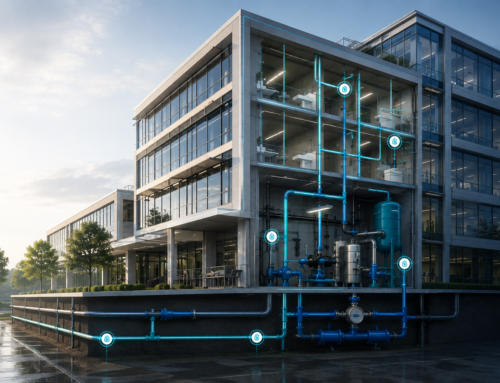
CCPWatchⓇ connects directly to existing SCADA and telemetry infrastructure, meaning that it can be integrated without infrastructure overhauls. Once connected, the software captures water quality data at configurable intervals, from seconds or longer periods, based on risk and site requirements. Information Engine™ aggregates this sensor data into a unified operational view, enabling managers to monitor water quality across all CCPs from a single interface.
The software’s HBTs functionality automates quantitative microbiological risk assessment (QMRA) calculations and disability-adjusted life year (DALY) assessments against regulatory benchmarks. This translates raw parameter data into quantified risk metrics that support both operational decision-making and regulatory reporting.
The system delivers automated SMS and email alerts to relevant staff when parameters exceed defined thresholds, enabling rapid response. The secure cloud-based dashboard provides immediate access to both live and historical water quality data, supporting trend analysis and audit preparation.
Bridging Monitoring with Compliance Automation
Compliance reporting consumes significant operational resources when it relies on manual log compilation, file retrieval, and data reconciliation. CCPWatchⓇ compliance automation eases these administrative burdens.
By connecting up-to-date CCP data to automated report generation, Information Engine™ automatically produces logs and Section 22-ready reports. Reports follow regulatory formatting requirements and provide an immutable audit trail with timestamps, alert histories, and parameter summaries.
Digital records in both PDF and CSV formats streamline audit processes and regulatory submissions. Automation reduces transcription errors, prevents missing entries, and provides leadership, regulators, and stakeholders with documented evidence of consistent commitment to maintaining compliance.
Predictive Analytics and the Shift Toward Proactive Risk Management
Automated online monitoring establishes visibility, and predictive analytics extends that visibility into anticipatory risk management.
Rather than only waiting for threshold violations to trigger alerts, CCPWatchⓇ predictive systems identify emerging patterns before they produce breaches. Declining filter performance trends, disinfection levels approaching lower thresholds during peak demand, or gradual parameter drift all become visible before they trigger compliance failures.
Information Engine™ analyses sensor data and generates actionable forecasts, enabling operations teams to schedule preventive maintenance, adjust staffing, and modify control strategies based on predicted conditions rather than reactive responses.
This capability shifts water quality management from problem response to problem prevention, reducing unplanned interventions while maintaining documented compliance continuity.
Implementing a Preventative Monitoring Strategy That Works
Once CCPWatchⓇ is integrated with your SCADA and telemetry systems, it leverages your current sensor investments while adding the timely data capture, rapid alerts, and automated reporting capabilities that legacy systems lack.
D2K Information’s modular approach supports both new installations and legacy infrastructure upgrades, with deployment timelines that minimise operational disruption.
Once implemented, CCPWatchⓇ can be configured with role-based dashboard access aligned to responsibilities. This ensures operational data remains secure while staff and leadership can access the data they require at any point. The trend data that Information Engine™ and CCPWatchⓇ arms utilities with allows rapid, targeted intervention in a proactive manner that is not possible with legacy systems.
Building Resilience in Water Quality Management
Utilities across Australia are adopting CCPWatchⓇ technology not merely to satisfy regulatory requirements, but to establish consistent control over water quality outcomes, ensuring that community health is reliably protected.
Investing in automated online CCP monitoring delivers visibility that prevents problems rather than documenting them after the fact. With configurable parameter tracking, automated compliance reporting, and predictive analytics, operations leaders maintain both regulatory alignment and the operational confidence that comes from genuine system control.
Getting ahead of risks means moving beyond reaction and into rapid action. At D2K Information, we help water utilities gain clarity and control by using smart systems built for tasks like critical control point monitoring. With automation, secure cloud-based dashboards, and reporting aligned directly to SDWR 2025 and ADWG standards, it is easier to stay compliant and protect public health. Contact our expert team today to talk about a proactive solution that fits seamlessly with your current setup.