Remote Monitoring Solutions for Healthcare Water Systems
Water safety in healthcare demands precision that traditional monitoring methods struggle to deliver. Hospitals and aged care facilities serve immunocompromised populations where even minor lapses in water quality can have serious consequences. With summer conditions increasing pathogen proliferation risk in plumbing and cooling systems, operations leaders face mounting pressure to demonstrate continuous compliance rather than periodic snapshots.
CCPWatch™ technology from D2K Information enables healthcare facilities to shift from reactive testing to continuous, automated oversight. With 2-minute SCADA/PLC polling and predictive analytics delivered through the Information Engine platform, early intervention replaces emergency response as the operational standard.
This approach strengthens compliance with the Australian Drinking Water Guidelines (ADWG) and the Safe Drinking Water Regulations 2025 (SDWR 2025), while automating the Section 22 reporting that consumes considerable administrative resources. For operations directors managing complex healthcare infrastructure, the result is defensible compliance data and reduced regulatory exposure.
Understanding the Stakes: Why Real-Time Water Monitoring Matters in Healthcare
Healthcare facilities present unique water safety challenges that general commercial buildings do not share. Patients recovering from surgery, undergoing chemotherapy, or managing chronic conditions have compromised immune responses. Exposure to waterborne pathogens at concentrations that healthy individuals might tolerate can trigger severe illness in these populations.
Legionella pneumophila thrives in water systems where temperatures sit between 25°C and 45°C, particularly in low-flow areas or infrequently used outlets. Summer conditions and underutilised building wings create ideal proliferation environments. The challenge for operations teams lies in detecting these conditions before they escalate.
CCPWatch™ continuous monitoring addresses this gap by tracking temperature, chlorine residual, and flow rates across critical control points in real time. When parameters drift toward risk thresholds, automated alerts enable intervention before conditions reach levels that support pathogen growth.
Moving Beyond Manual: The Limitations of Traditional Water Checks
Periodic grab sampling remains part of water safety programs, but relying on it as the primary compliance mechanism leaves significant blind spots. The time between sample collection and laboratory results can span days, during which conditions may deteriorate further or, equally problematic, return to normal and mask an underlying systemic issue.
Manual record-keeping compounds the challenge. Paper logs, handwritten temperature readings, and spreadsheet-based tracking create fragmented audit trails that consume hours to compile when regulators or internal stakeholders require evidence of due diligence.
Under SDWR 2025, healthcare facilities face heightened expectations for demonstrating continuous compliance rather than point-in-time conformance. Section 22 reporting requirements demand comprehensive documentation that manual systems struggle to produce efficiently. The administrative burden diverts resources from proactive risk management toward retrospective paperwork.
Built for Healthcare: How Remote Monitoring Works in Medical Facilities
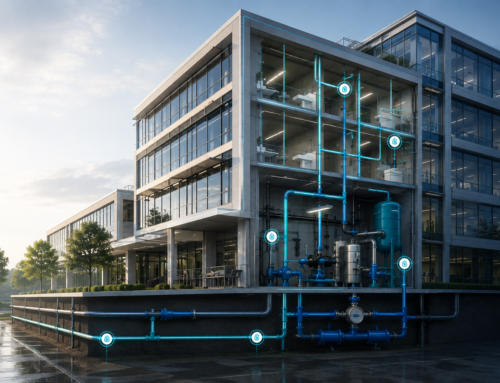
Implementing continuous monitoring need not require wholesale infrastructure replacement. CCPWatch™ technology integrates with existing SCADA and PLC frameworks through 2-minute polling cycles, providing granular visibility without disrupting established building management systems.
Sensors deployed at critical control points feed data directly to D2K’s Information Engine platform, where operations, compliance, and infection control teams access unified dashboards. This shared visibility eliminates the information silos that often delay response when multiple departments need to coordinate on water safety issues.
The platform delivers automated alerts via SMS and email when parameters exceed defined thresholds. For multi-building healthcare campuses or aged care portfolios, centralised monitoring provides consistent oversight without requiring additional site-based resources.
D2K’s solutions are deployed across Australian healthcare facilities, including hospitals and aged care centres, with integration options for both new construction and retrofit applications.
Predicting and Preventing: The Power of Analytics in Water Safety
Effective monitoring tracks current conditions. Advanced systems identify emerging risk patterns before threshold breaches occur.
The Information Engine platform analyses continuous data streams to detect trends that warrant attention. Gradual chlorine residual decline in a specific building zone, combined with reduced flow rates and rising temperatures, may individually remain within acceptable ranges while collectively indicating elevated Legionella proliferation risk.
For facilities working toward Health-Based Targets (HBT), this predictive capability supports the log reduction requirements central to quantitative microbial risk assessment (QMRA). Meeting 6-log virus, 5-log bacteria, and 4-log protozoa reduction targets requires confidence that treatment barriers perform consistently, not just at the moment of sampling.
D2K’s HBT functionality integrates DALY calculations into the compliance framework, enabling operations teams to demonstrate pathogen reduction performance against ADWG health outcome objectives.
D2K’s consulting team works with healthcare clients to configure alert parameters and interpret trend data, ensuring that predictive insights translate into timely operational decisions.
Setting It Up Right: Implementing Remote Monitoring Without Disruption
Healthcare environments demand implementation approaches that minimise disruption to clinical operations. CCPWatch™ deployments typically proceed through phased integration, beginning with critical control points identified through site-specific risk assessment.
Configuration involves establishing appropriate alert thresholds, defining user access roles, and connecting data feeds to existing reporting workflows. The Information Engine platform’s interface aligns with formats familiar to building management and compliance teams, reducing the learning curve for frontline users.
Training focuses on practical dashboard navigation and alert response protocols rather than technical system administration. Most healthcare teams achieve operational competence within focused sessions that emphasise real data interpretation over theoretical instruction.
The outcome is a monitoring framework that enhances existing water safety programs rather than replacing them, providing the continuous oversight that periodic testing alone cannot deliver.
Clearer Insights, Safer Facilities: Why Data Matters Now
Hotter weather places extra pressure on healthcare water systems, just when more patients often come through the door. At the same time, the expectations around compliance have not eased. If anything, they have only grown.
Remote monitoring brings welcome control to that chaos. With instant alerts, predictive analytics, and dashboard-level access to live data, healthcare teams gain confidence through visibility. The shift toward prevention is not just good practice anymore; it is required.
By replacing outdated tracking with real-time monitoring, keeping risks low and patients safe, it moves from best effort to best practice. That is a better system for everyone, from frontline staff to patients to compliance officers.
Move beyond slow checks and scattered records with a smarter approach to water safety in your facility. We help modern healthcare organisations make quicker, more informed decisions with real-time monitoring, predictive analytics, and systems built for compliance from the start. Protect your patients and stay inspection-ready without the last-minute scramble. To see how your team could simplify healthcare facility water testing while staying ahead of risk, contact us at D2K Information today.