Navigating Critical Control Points for Safe Drinking Water
Safe drinking water depends on how precisely operators can measure and control water quality risks as they emerge. This is where accurate and timely monitoring of critical control points (CCPs) across the water network becomes essential. These are the moments in the treatment process where risk is highest and timing matters most.
For Victorian water agencies, setting up a robust CCP monitoring operation helps prevent outbreaks, safeguard your community, and meet compliance obligations before issues escalate. With automated online monitoring and reporting, operators can move from reacting after the fact to proactive control. Today we’ll outline why timely CCP monitoring matters now more than ever, why legacy monitoring methods are falling behind, and how modern systems enable teams to stay ahead of emerging risks.
Understanding Critical Control Points in Water Safety
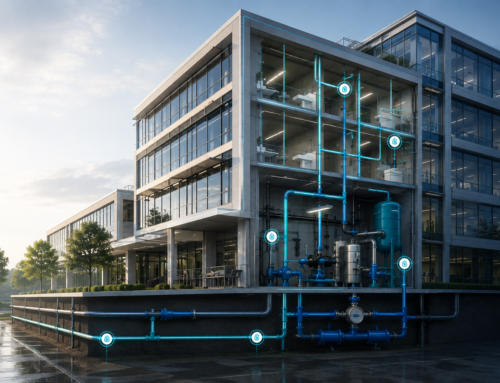
At the heart of any water network are the locations where treatment makes the biggest impact on risk reduction. These critical control points (CCPs) are found at places like disinfection units, filtration stations, and storage areas. CCPs are where issues tend to surface first, whether due to a spike in turbidity, faulty chlorination, or changes in pressure that can lead to contamination
CCPs are at the core of Victoria’s Safe Drinking Water Regulations (SDWR) 2025, and the national Australian Drinking Water Guidelines (ADWG). Under the recently updated Victorian regulations, agencies must monitor CCPs across the entire water network for the first time. Agencies must also maintain documentation that demonstrates ongoing compliance with the microbial health-based targets (HBTs) framework of the ADWG.
Research confirms that the greatest risks to consumers of drinking water are pathogenic microorganisms, reinforcing the need for effective monitoring of such threats. Tracking CCPs precisely and in a timely manner provides a clear view into how the system responds throughout daily cycles and extreme weather events, enabling targeted interventions that safeguard HBTs compliance.
By identifying and monitoring the highest-risk points, there is no guessing. Effort is focused where it counts most. Each CCP serves as a safeguard for the entire water supply system, acting as a checkpoint where intervention can take place if any parameter falls outside a safe range. In most facilities, water moves from source to treatment, to storage, and finally to distribution, so monitoring these steps ensures any potential issue is quickly addressed.
Moving from Manual Checks to Automated Online Monitoring
Traditional water safety checks rely on periodic testing that is logged manually and reviewed later. That delay means some problems are discovered too late. Automated online monitoring changes this dynamic entirely.
D2K Information designed the Information Engine™ software and the integrated CCPWatchⓇ module specifically to address the compliance challenges facing Australian water agencies. Information Engine™ and CCPWatchⓇ poll water quality data at a configurable interval, which can be down to seconds or larger intervals. That means if something drifts, operators do not wait for lab results, they receive alerts immediately. Instead of looking back at what went wrong, they can adjust the process incrementally or substantially, preventing failure at the outset.
Manual methods often fall short under pressure, particularly during system shocks or seasonal peaks. Smart solutions keep pace with these demands and give facilities the speed to act, not just observe.
Information Engine™ and CCPWatchⓇ integrate directly with existing SCADA or telemetry sensors, meaning no infrastructure overhaul is needed. Once brought online, the software allows for flexible, custom monitoring of CCPs across the network. This is paired with timely reporting and automated alerts via a secure cloud dashboard.
These integrated solutions mean that potential failures, temperature shifts, or loss of disinfectant residual are caught rapidly, not hours later, so corrective measures can take place immediately. Facilities can then use detailed digital logs to support regulatory discussions and troubleshoot specific problem areas in the system.
Using Predictive Analytics to Stay Ahead of Risks
Detecting an issue as it happens is useful, but anticipating one before it starts is transformative. Information Engine™ and CCPWatchⓇ’s predictive analytics help achieve exactly that. By analysing CCP trend data, teams can spot small shifts in measurements that hint at early warning signs, model residual risk using timely data from multiple sources to improve accuracy over time, and set thresholds that trigger alerts before HBTs are breached.
This predictive view allows decisions to be based on what is likely to happen, rather than what has already failed. It moves operations away from troubleshooting and toward continuous improvement. This is because the more monitoring data that is collected, the more accurate early risk indicators become.
Information Engine™ also supports quantitative microbial risk assessment (QMRA) and disability-adjusted life year (DALY) calculations, providing the quantitative framework needed to demonstrate that treatment barriers are achieving the required pathogen log reduction outcomes to meet HBTs.
The end result is that trend analysis across data collected throughout the system offers new perspectives, highlighting seasonal effects, equipment fatigue, and operational gaps before they create problems. What once required months of review can now be flagged in days or even hours, lowering the likelihood of an adverse health event.
Automating for Compliance: Reports Without the Hassle
Compliance can feel like another full-time workload, especially when audits are near and paper reports need to be chased up. Automating compliance reporting is one of the most practical steps for modern water safety management.
The Information Engine™ automatically generates Safe Drinking Water Act (SDWA) Section 22 reports, with logs formatted for immediate regulatory submission. Immutable audit trails track all data changes and access, removing any gaps in documentation. These reports are structured for regulators to review without any need for manual collation or additional commentary.
For facilities with stretched teams, this kind of compliance automation means less time sorting through files and more time for action. It builds trust with regulators by demonstrating not just that data was recorded, but that it was acted upon.
The automated process ensures accurate timestamps, simplifies summary creation, and presents all necessary reporting fields for quick retrieval. As evolving standards require more frequent and detailed reporting, automation provides operators with a reliable foundation for proof of due diligence.
Turning Data into Safer Systems
The primary goal for Victorian water agencies is protecting public health. Achieving that takes more than raw data. It requires the ability to interpret and act on that data quickly. Smart monitoring supports this objective. By focusing on a preventative approach, facilities can configure systems to respond rapidly when something requires attention.
Supporting this approach, Information Engine™ and CCPWatchⓇ send out targeted, rapid alerts to relevant staff when readings go out of spec. The software also offers secure, role-specific dashboards that display the data that each staff member needs, and what they need to act on. Short response times mean small issues do not escalate into risk events, especially during heatwaves or maintenance windows when systems are more vulnerable.
By leveraging richer datasets, operators are able to fine-tune both day-to-day routine procedures and long-term resource investment. The aggregation of these incremental improvements leads to higher overall system reliability and reduced likelihood of costly interventions.
Each step of data collection and system response feeds into a cycle of continuous improvement. Historical data from interventions and equipment logs can be revisited to refine predictive models or adjust alert thresholds, contributing to better action plans with each passing month. This proactive model ensures that, regardless of season or external pressures, risks to water safety are effectively controlled.
Future-Ready Water Safety Starts with Smarter Monitoring
Effectively controlling water safety at CCPs across the network takes a proactive approach that puts insight to work. By upgrading monitoring practices and using predictive tools, Victorian water agencies can move to simpler processes, faster alerts, and streamlined reporting.
This approach doesn’t need a full system rebuild. Progress is made by building on what works, with timely access to critical water safety data and fewer manual steps. When monitoring is smarter, protection extends beyond the network. It covers communities, reputation, and long-term peace of mind. Prevention is not a goal. It is the standard that should be expected.
At D2K Information, our preventative approach to water safety is built on timely data and rapid response to help you make data-driven decisions across your entire network. Discover how our technology supports your goals for critical control point water safety. Contact us today to take the next step.