Water Quality Parameters in Renewable Energy Facilities
Water is integral to renewable energy operations. Whether cooling turbines, supporting electrochemical processes, or circulating through heat exchangers, water quality directly influences asset longevity, energy output, and regulatory standing. When water management falls short, the consequences manifest as accelerated equipment degradation, reduced thermal efficiency, and heightened compliance exposure.
For senior operations managers overseeing water treatment in renewables, the challenge is clear: traditional sampling methods and delayed laboratory results leave facilities vulnerable to conditions that evolve faster than manual processes can track. The shift to real-time monitoring represents a fundamental change in how water risk is managed, moving from reactive incident response to predictive control that protects both performance and regulatory position.
Research into the water-energy nexus confirms that water quality management is inseparable from energy system performance. For facilities where unplanned downtime carries high financial and reputational costs, precision monitoring is no longer optional
How Water Quality Affects Renewable Energy Systems
Renewable energy sites consume substantial water volumes across cooling towers, boilers, hydrogen production systems, and closed-loop circulation. When water quality deviates from specification, degradation pathways accelerate.
Scale formation from mineral precipitation restricts flow and reduces heat transfer efficiency. Corrosion compromises the structural integrity of tanks, valves, and pipework while introducing particulate contamination. Biological growth, including biofilm and algal colonisation, creates fouling that increases pressure drop, reduces asset lifespan, and introduces microbial risk.
These degradation mechanisms often develop gradually, with early indicators detectable only through continuous parameter tracking. Traditional approaches that rely on periodic grab samples and laboratory turnaround times create blind spots where conditions can deteriorate significantly between measurements. Without direct visibility into pH trends, conductivity shifts, or turbidity changes, subtle deviations compound into major operational events.
Compliance teams benefit equally from continuous data capture. Documented parameter histories clarify when deviations originated, supporting root cause analysis and demonstrating due diligence. For sites with multi-stage treatment processes, continuous monitoring reveals issues that discrete sampling would miss entirely.
Key Water Quality Parameters for Renewable Operations
Effective monitoring focuses on parameters with direct operational and compliance implications:
- pH: Out-of-specification pH accelerates corrosion rates and compromises treatment chemical efficacy. Real-time tracking enables immediate dosing adjustments.
- Conductivity: Indicates dissolved mineral and salt concentrations, serving as an early indicator of contamination ingress or equipment leakage.
- Turbidity: Measures suspended particulate levels, providing early warning of microbial proliferation or material intrusion.
- Microbiological indicators: Bacterial monitoring prevents biological fouling and supports Health-Based Targets verification, including assessment against 6-log virus, 5-log bacteria, and 4-log protozoa reduction benchmarks.
All parameters should align with Australian Drinking Water Guidelines (ADWG) and Safe Drinking Water Regulations 2025 (SDWR 2025) requirements. CCPWatch™ technology enables automated tracking at defined critical control points, eliminating the latency inherent in manual sampling while generating continuous compliance records.
CCPWatch™ Integration with Existing Infrastructure
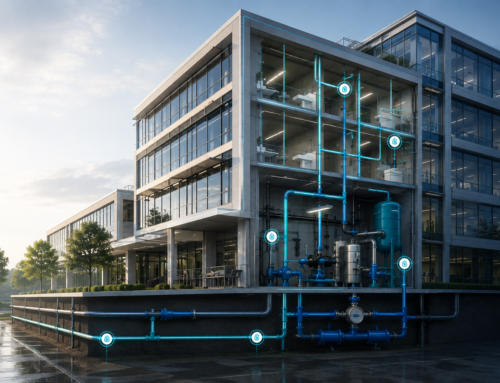
Implementing advanced water monitoring does not require infrastructure overhaul. Most renewable facilities already operate SCADA or PLC systems across their networks. D2K Information’s CCPWatch™ technology connects directly to existing control systems, delivering 2-minute polling intervals that capture parameter changes as they occur.
The Information Engine platform aggregates sensor data into a unified operational view, enabling managers to monitor water health across multiple critical control points from a single interface. Health-Based Targets functionality, launched in September 2025, automates QMRA calculations and DALY assessments, translating raw parameter data into quantified risk metrics.
This integration delivers several operational advantages:
- Automated SMS and email alerts when parameters exceed defined thresholds, enabling rapid response regardless of staff location.
- Automated Section 22 compliance reporting, eliminating manual log compilation and reducing administrative burden on compliance teams.
- Predictive analytics that identify emerging patterns weeks before they manifest as operational incidents, shifting water management from reactive to anticipatory.
- Preventive actions informed by trend analysis may include adjusting chemical dosing schedules, modifying flushing intervals, or addressing system hotspots before failures develop. The cumulative effect is reduced unplanned downtime and extended asset lifecycles.
Meeting Australian Regulatory Standards
Seasonal variations introduce additional complexity to water management. Elevated ambient temperatures accelerate biological activity and alter chemical equilibria, creating conditions that can shift faster than periodic sampling captures. Without real-time visibility, treatment teams find themselves responding to conditions that have already progressed beyond early intervention thresholds.
CCPWatch™ automated alerts and continuous data logging enable treatment adjustments in step with changing conditions, maintaining alignment with ADWG and SDWR 2025 compliance targets. Historical parameter records support confident responses to regulatory enquiries, demonstrating consistent commitment to water quality standards.
Across Australian renewable operations, CCPWatch™ systems are establishing new benchmarks for operational transparency. By connecting critical control point monitoring directly to automated Section 22 reporting requirements, facilities achieve documented compliance with reduced administrative overhead.
Data-Informed Water Management
Continuous monitoring through the Information Engine platform ensures operational data is always available to inform decisions and regulatory submissions. Consistent parameter records provide reference points for infrastructure planning and capacity assessments.
D2K Information’s integrated consulting and technology support helps renewable facilities configure CCPWatch™ systems for their specific operational requirements, addressing compliance complexity before it creates exposure. This approach enables site operators to focus on continuous improvement rather than reactive incident management.
Water quality monitoring in renewables extends beyond compliance verification. It forms a core component of operational resilience, protecting equipment investment, maintaining energy output, and managing regulatory risk. Facilities equipped with CCPWatch™ technology operate with greater predictability, respond to incidents more efficiently, and build the documented compliance history that regulators expect.
Take Control of Water Quality and Compliance
D2K Information’s CCPWatch™ technology and consulting expertise help renewable facilities stay ahead of operational challenges and regulatory requirements. Discover how critical control point monitoring can transform your approach to water management. Our team is ready to help you streamline compliance, mitigate risk, and build a smarter, safer operation.